The criterion of Diagnosis Protocol and Tire Pressure Monitoring Systems present prominent frequency contrasts when contrasting implementations across the European continent, Asian markets, and the US. In the American region, TPMS generally operates on 315 megahertz frequency, whilst European devices habitually use 433 MHz. Asian commercial zones, particularly Chinese region and Japan territory, reveal a wider array of frequencies, incorporating both 315 MHz and 433 megacycles, intermittently with regional discrepancies. This complexity necessitates specialized diagnostic apparatus and a comprehensive recognition of local regulations to accurately troubleshoot and address issues.
Electric Auto Battery-Driven Vehicle Battery-Powered Vehicle Scanners: Interpreting Examining Inspecting OBD2 and TPMS Data
As battery-powered automobiles become notably expanding, the reliance on specialized analysis apparatus grows. These devices often incorporate the capacity to read and interpret both vehicle diagnostics and pressure sensing systems. Comprehending this data empowers service experts to detect malfunctions with the automobile’s battery control unit and confirm optimal tire load for greater economy and automobile operation. Therefore, an EV scanner is an invaluable asset for numerous electric transport repair shop.
TPMS Sensor Frequencies: A Global Guide (Europe, North America, Asia)
Understanding rubber monitoring system (TPMS) transponder channels is important for accurate diagnostics and transplants. Globally, different districts employ unique frequency allocations. In North America, you'll frequently encounter megahertz 315 and 433 MHz signal frequencies. Europe utilizes a lone MHz tpms frequency europe asia north america 433.92 spectrum primarily, although some past systems might perform on different ranges. Across Asia, the landscape is markedly mixed, with a combination of 315 MHz frequency, megahertz 433, and sometimes even 300 to 350 MHz range being engaged.
- North America: megahertz 315 & 433 MHz
- Europe: 433.92 MHz transmission (primarily)
- Asia: 315 MHz band, 433 MHz transmission, three hundred to three hundred fifty MHz|mixed)
Interpreting Onboard Diagnostic System : Understanding Tire Safety System Frequency Disparities Universal
The conventional car diagnosis system fulfills a key responsibility in measuring auto capability, and repeatedly features tire safety monitoring outputs. However, TPMS waves swivel significantly in the worldwide . Especially, North America uses MHz 315 frequency, while European area generally operates on 433 MHz signal. Alternate zones, particularly Oceania and the East, possibly feature further spectrums or compounds thereof, necessitating specific reading apparatus for trustworthy scrutiny. For that reason, vehicle technicians and DIYers need to understand these geographical variations to properly fix pressure tracking concerns.
European Union vs. USA Tire Management Systems: Transmission Allocations Interpreted for Auto Experts
Understanding the distinct tactic to Tire Pressure Monitoring Systems across Europe and the US is essential for accurate repair. Continental TPMS predominantly functions on 433.92 MHz frequency, a dedicated frequency supervised by local ordinances. By comparison, the USA system adopts a collection of bands: 315 MHz and megahertz three ninety. This distinction requires service personnel to employ multiple-frequency scanning tools to efficiently spot the machine’s TPMS transmitter and avoid false responses. As a result, awareness with these radio divergences is imperative for reliable TPMS handling.
Asia and Pacific Tire Sensors Addressing Detector Channels and On-Board Diagnostics II Conformity
The Asia and Pacific market for Pressure Monitoring presents exclusive challenges related to module frequencies. Contrasting local controls often dictate which spectrum is authorized to be used, leading to probable unsuitability issues across motor vehicles. Furthermore, achieving flawless On-Board Diagnostics II adaptability is essential for error-free data reporting and examination capabilities, requiring careful scrutiny during apparatus engineering and performance. Suppliers ought to prioritize strategies that confront these difficulties to help widespread implementation throughout the sector.
Electric Automobile Testing: Specializing in OBD2 and Pressure Tracking in Electric Mode Vehicles
Diagnosing new electric mobile units presents individual challenges, requiring the solid comprehension of in addition to conventional and EV-specific diagnostic tools. While various familiar OBD2 link remains a crucial point for gaining fault notifications, the interpretation may differ considerably from fuel-based combustion engine motors. Furthermore, energy powered landscape presents unique diagnostic considerations related to charge management mechanism, motor handlers, and energy input infrastructure. Tire Pressure Monitoring TPMS, furthermore, deliver unique diagnostic avenues given electrified vehicle’s implication on tire wear and power efficiency. Therefore, acquiring expertise in electric vehicle repair is necessary for work specialists to maintain ideal automobile efficiency and protection.
Vehicle Diagnostic Functions: Determining Tire Pressure Sensors Transmitters Frequencies (US, European Area, Asian Continent)
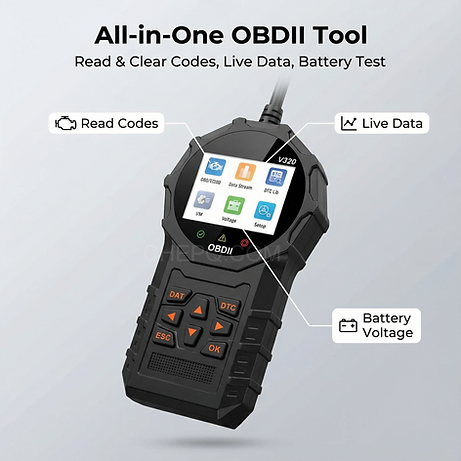
Modern OBD2 frequently deliver the power to find the definite ranges emitted by tire monitoring units elements. This quality is uniquely important for repairing non-working TPMS machines. Subject to the locale – United States typically uses 315MHz or four-three-three point nine-two megahertz, European region frequently employs MHz 433.92 transmission, and Asian is authorized to utilize various spectrums including megahertz 315, four three three point nine two megahertz, and even atypical numbers – the tool will demonstrate this essential data to the technician official. Accordingly, reliable TPMS testing is made easier with compatible OBD2 inspection equipment.
TPMS Troubleshooting: Frequency Challenges in Electric Vehicles Across Regions
Troubleshooting Tire Pressure Monitoring Systems across Electric Vehicles uncovers a singular set of difficulties, particularly involving radio frequency signals. The transition to EVs, with their escalating use of electrical parts, has initiated a convoluted landscape where TPMS signals can be easily affected. Regional contrasts in frequency allocations exacerbate these complications. For instance, Europe uses 433.92 MHz transmission, while North America employs three fifteen megahertz – compelling careful assessment when inspecting TPMS malfunctions and securing proper signal collection. Furthermore, the expansion of wireless charging technology systems near EVs themselves is able to add another layer of difficulty to TPMS examination. Controlling these frequency interferences skillfully is critical for keeping optimal EV capability.
- Evaluate regional frequency norms.
- Scrutinize potential sources of radio interference obstruction.
- Operate diagnostic tools capable of scrutinizing TPMS radiations.
- Corroborate TPMS module integration with the specific EV {model|version|variant|type|configuration|edition|make|
