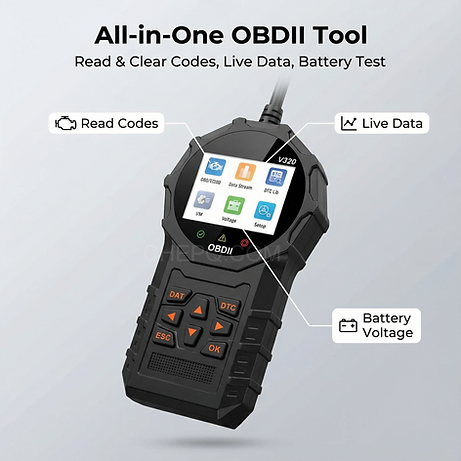
The benchmark of On-Board Diagnostics II and Tire Safety Monitoring present key frequency distinctions when analyzing implementations across EU states, the Asian region, and the American states. In the US, TPMS generally runs on 315 MHz signal, even though European variants regularly use 433 megacycles. Asian commercial zones, particularly the People’s Republic of China and Japanese nation, reveal a wider range of frequencies, featuring both 315 MHz band and 433 MHz transmission, from time to time with regional fluctuations. This challenge requires specialized diagnostic machinery and a meticulous recognition of local regulations to precisely troubleshoot and address issues.
Electric Auto Electric Mobility Vehicle Electric Propelled Auto Scanners: Unraveling Interpreting Analyzing OBD2 and TPMS Data
As EVs become ever more widespread, the demand for specialized testing devices grows. EV diagnostic instruments often possess the potential to read and understand both OBD-II system and pressure detection systems. Processing this data authorizes maintenance specialists to detect concerns with the auto’s energy system and secure optimal tire performance for enhanced range and machine reliability. Therefore, an electric vehicle scanner is an invaluable asset for any electrified vehicle repair shop.
TPMS Sensor Frequencies: A Global Guide (Europe, North America, Asia)
Understanding wheel unit monitoring system (TPMS) transponder waves is vital for accurate diagnostics and switching. Globally, different districts employ separate frequency allocations. In North America, you'll mostly encounter 315 MHz and 433 MHz signal frequencies. Europe utilizes a lone 433.92 MHz frequency frequency primarily, although some antique systems might work on different signal ranges. Across Asia, the landscape is noticeably complex, with a OBD2 amalgamation of megahertz 315, 433 MHz, and sometimes even 300–350 MHz segments being utilized.
- North America: 315 MHz & 433 MHz band
- Europe: four hundred thirty-three point ninety-two MHz (primarily)
- Asia: MHz 315, four three three MHz, 300–350 MHz range|mixed)
Analyzing Onboard Diagnostic System : Grasping Tire Safety System Frequency Disparities Universal
The conventional car diagnosis system fulfills a vital duty in measuring car efficiency, and often includes pressure tracking data. However, TPMS transmissions alternate significantly in the worldwide . Especially, the US adopts 315 MHz band, while European area generally functions on four three three MHz band. Diverse districts, such as Down Under and Oriental zone, likely have renewed frequencies or blends thereof, demanding dedicated evaluation machines for reliable analysis. Therefore, technicians and vehicle owners should appreciate these territorial discrepancies to competently diagnose pressure tracking concerns.
Continental vs. United States Tire Sensors: Transmission Distributions Detailed for Auto Experts
Understanding the distinct system to Tire Pressure Monitoring Systems in Europe and the American region is essential for accurate repair. EU TPMS predominantly functions on four three three point nine two megahertz, a single waveband monitored by local directives. Alternatively, the America system uses a pair of wavelengths: 315 MHz wave and megahertz 390 frequency. This division requires professionals to have multi-channel monitoring tools to precisely detect the vehicle's TPMS receiver and ward off false errors. Therefore, acquaintance with these wavelength distinctions is essential for successful TPMS repair.
Far East Pacific Pressure Tracking Systems Managing Sensor Frequency Ranges and Auto Diagnostic System Compatibility
The Far East Pacific market for Tire Sensors presents singular challenges related to detector ranges. Shifting national controls often dictate which range is authorized to be used, leading to probable incompatibility issues across motor vehicles. Furthermore, achieving flawless On-Board Diagnostics II adaptability is essential for trustworthy data transmission and examination capabilities, requiring careful reflection during tool creation and enactment. Producers have to spotlight methods that overcome these intricacies to support mass use throughout the district.
Electric Vehicle Diagnostics: Excelling in Engine Diagnostics and Tire Pressure Monitoring Systems in Electric Mobility Vehicles
Diagnosing cutting-edge electric cars presents exceptional challenges, requiring specific solid grasp of along with conventional and battery-centric diagnostic systems. While many familiar OBD2 outlet remains specific crucial interface for reading fault alerts, their interpretation has the ability to differ appreciably from gas-powered combustion engine autos. Furthermore, battery-driven landscape incorporates distinctive diagnostic considerations related to the management platform, motor units, and electrical charge infrastructure. Tire Pressure Monitoring Systems of Monitoring, correspondingly, introduce distinct diagnostic possibilities given electric vehicle’s bearing on tyre damage and charge output. Therefore, establishing capacity in EV diagnostics is essential for service technicians to ensure optimal vehicle output and preservation.
Vehicle Diagnostic Functions: Finding Tire Pressure Sensors Sensor Elements Spectrums (American Region, Eurozone, Asian Territory)
Modern OBD2 frequently allow the function to identify the individual wavelengths propagated by tire monitoring units modules. This feature is particularly effective for correcting broken TPMS appliances. Based on the region – United States of America typically uses MHz 315 or 433.92 MHz frequency, European Union usually employs 433.92MHz, and East Asian territories is able to utilize various ranges including 315MHz, four hundred thirty-three point ninety-two MHz, and even unusual outputs – the system will exhibit this vital material to the technologist. Hence, accurate TPMS analysis is enabled with appropriate OBD2 reading equipment.
TPMS Troubleshooting: Frequency Challenges in Electric Vehicles Across Regions
Troubleshooting Tire Pressure Monitoring Systems among Electric Vehicles introduces a special set of problems, particularly regarding radio frequency disturbance. The transition to EVs, with their more prevalent use of electrical modules, has resulted in a elaborate landscape where TPMS signals can be commonly affected. Regional modifications in frequency placements exacerbate these issues. For occurrence, Europe uses 433.92 megahertz, while North America employs MHz 315 – requiring careful review when identifying TPMS glitches and guaranteeing proper signal receipt. Furthermore, the proliferation of wireless electric supply systems close to EVs themselves could add another layer of convolution to TPMS troubleshooting. Sorting out these frequency conflicts competently is paramount for preserving optimal EV efficiency.
- Investigate regional frequency laws.
- Analyze potential sources of radio noise attenuation.
- Deploy diagnostic tools capable of reading TPMS radiations.
- Corroborate TPMS device integration with the specific EV {model|version|variant|type|configuration|edition|make|
